Best Data Room for Startups in 2026: Top 8 Picks

Most guides to the best data room for startups are really enterprise M&A buyers’ guides with a “startup” label stapled on. That’s a problem if you’re a founder with no legal team, a limited budget, and an investor asking for a data room by Friday.
This guide is different. It’s built around what early-stage founders actually need: fast setup, honest pricing, and enough security to satisfy investors — without paying for complexity built for billion-dollar M&A deals you’ll never run. Below, we cover what to look for, a quick-comparison table, and honest reviews of eight well-known data room providers, flagging clearly which ones are genuinely startup-priced and which are enterprise tools that startups sometimes use anyway.
What Startups Should Look for in a Data Room
Startups don’t need the same setup used by law firms or investment banks running complex M&A due diligence. What actually matters at the early stage is different:
- Fast, simple onboarding — founders shouldn’t need training to spin up a professional-looking room in minutes
- Transparent, startup-scale pricing — flat-rate or low per-user pricing instead of per-page enterprise fees that can run into five figures
- Investor-friendly sharing — clean folder structures, watermarking, and engagement tracking so you can see which investors are actually reviewing your materials
- Room to grow — the ability to scale up features (granular permissions, audit trails, integrations) as the company matures toward larger rounds
- A genuine free trial — so you can test the platform before committing budget you don’t have
Keep these criteria in mind as you read through the picks below — they’re the basis for every ranking on this list.
How We Reviewed These Virtual Data Room Vendors
To put together this list of the best virtual data room options for startups, we looked at published pricing, feature sets, and independent virtual data room reviews across review platforms and vendor documentation, rather than relying on marketing copy alone. We deliberately included both startup-priced virtual data room vendors and a few well-known enterprise names, since founders often encounter both when researching options — and it’s worth knowing upfront which category each provider actually falls into.
Best Data Room for Startups: Quick Comparison
| Provider | Best For | Starting Price | Free Trial |
|---|---|---|---|
| Ideals Visit | Series A+ due diligence, investor-ready security | Custom quote | Yes |
| Datasite | Large, complex M&A (rarely startup-appropriate) | $20,000+/year | Limited |
| Ansarada | Startups preparing larger capital raises | Freemium, pay per bidder | Yes |
| Firmex | Predictable flat-rate pricing, no complexity | ~$250/month flat | Yes |
| Intralinks | Complex, regulated deals (rarely startup-appropriate) | $10,000+/year | Limited |
| SecureDocs | Fast setup, unlimited users at a flat rate | $250/month flat | Yes (14 days) |
| DealRoom | Startups running a structured, multi-investor process | ~$1,000–3,000/month | Yes |
| DocSend | Pre-seed pitch deck sharing | ~$15–$45/month | Yes |
Pricing is approximate and drawn from published vendor information and third-party pricing research; always confirm current rates directly with each provider before committing.
Top 8 Best Data Rooms for Startups in 2026
1. Ideals
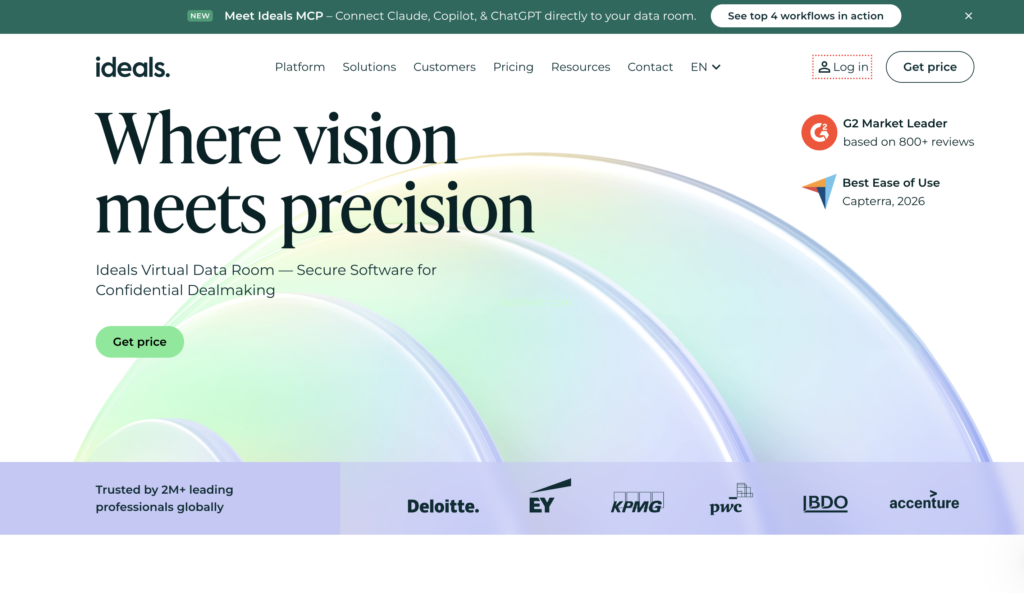
Overview: Ideals is one of the most consistently recommended virtual data room providers for startups moving into serious due diligence — typically Series A and beyond, when multiple investors need structured, secure access.
Key features:
- Granular access control and permission levels
- Smart engagement analytics on investor activity
- Fast onboarding relative to other enterprise-grade VDRs
- ISO-certified security infrastructure
Pricing: Custom quote based on storage and user count; generally more accessible than legacy enterprise platforms like Datasite.
Best for: Startups raising a priced round with multiple institutional investors who expect enterprise-grade due diligence tools.
Caveat: Pricing isn’t published upfront, so it takes a quote request to know exactly where you’ll land — less ideal if you want instant self-serve signup. See our full Ideals overview for a deeper look.
2. Datasite
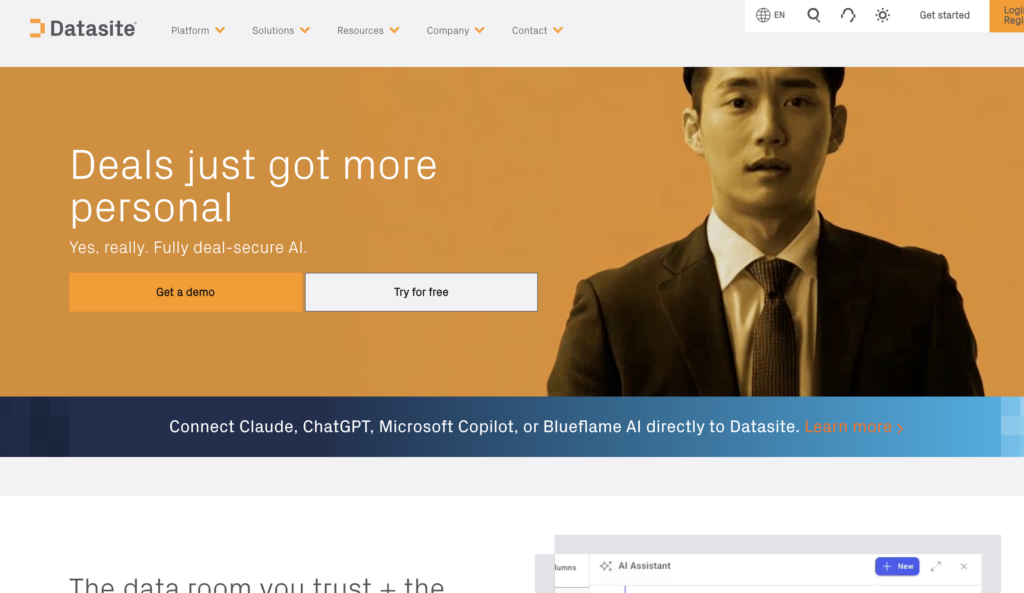
Overview: Datasite is a long-established enterprise data room built for large, high-value M&A transactions. It’s worth knowing about mainly so you can recognize when it’s the wrong fit: its legacy per-page pricing model was designed for law firms and investment banks, not seed-stage startups.
Key features:
- Deep configuration options for complex, multi-party deals
- AI-assisted document categorization
- Automatically generated compliance archives once a deal closes
Pricing: Typically $20,000–$40,000+ per year for a mid-market engagement — well beyond most startup budgets.
Best for: Startups approaching a very large, complex raise or acquisition where investors specifically expect an enterprise-grade platform — not a typical seed or Series A situation.
Caveat: This is the clearest example of a “startup” label being stretched too far. Unless you’re managing a genuinely large, complex transaction, Datasite’s cost and configuration overhead will likely outweigh any benefit over the other options on this list.
3. Ansarada
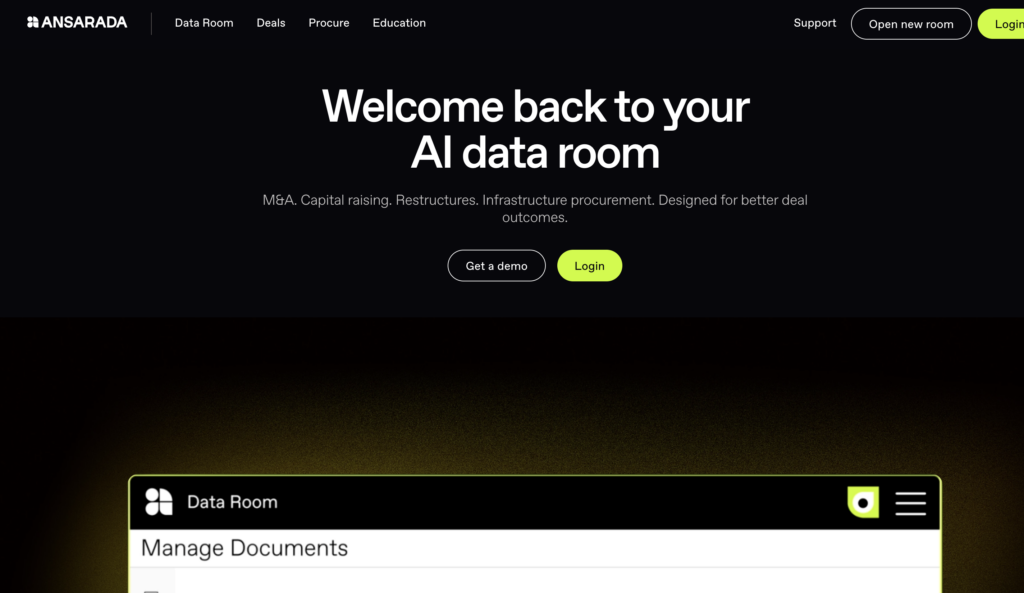
Overview: Ansarada brings AI-driven due diligence tools to the table, including a bidder engagement score that predicts deal progress based on document-viewing behavior.
Key features:
- AI-powered bidder engagement analytics
- Freemium tier — set up and organize your room for free, pay only once external investors join
- AI bulk redaction for sensitive documents
Pricing: Freemium; paid tiers apply once bidders/investors are added, generally starting around the low hundreds per month.
Best for: Startups preparing a larger, more competitive capital raise with several institutional investors reviewing materials simultaneously.
Caveat: Some users note the interface feels dated compared with newer entrants, and reopening archived rooms can be cumbersome.
4. Firmex
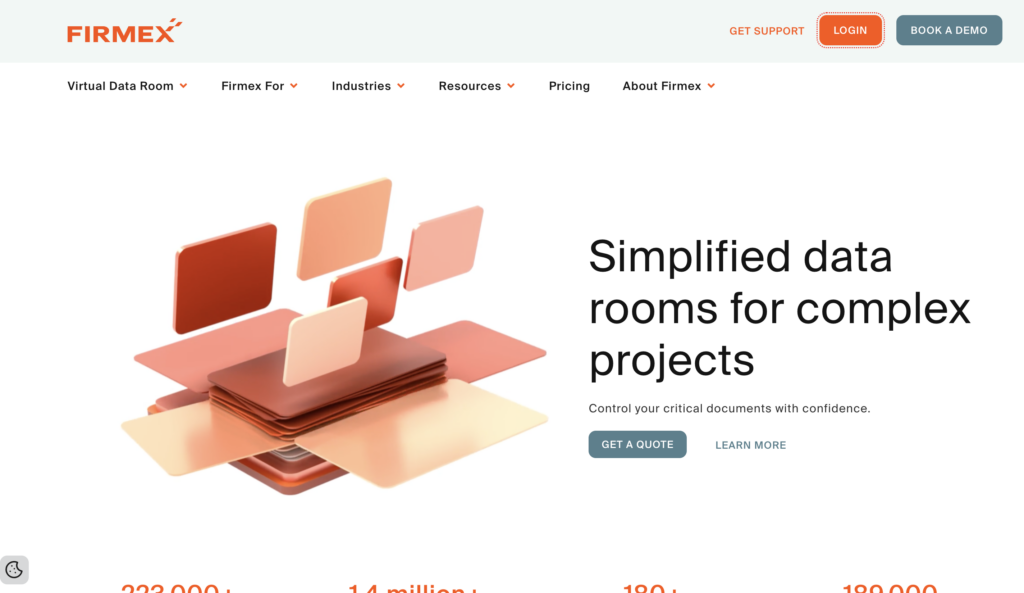
Overview: Firmex is a straightforward, flat-rate data room that trades some advanced deal-management depth for predictable, simple pricing.
Key features:
- Flat monthly rate — no per-page or per-user surprises
- Simple, fast setup
- Solid baseline security and permissions
Pricing: Roughly $250/month flat rate.
Best for: Pre-seed and seed startups that want predictable costs without a complicated feature set to learn.
Caveat: Fewer advanced analytics and AI features compared with more modern entrants like Ansarada.
5. Intralinks
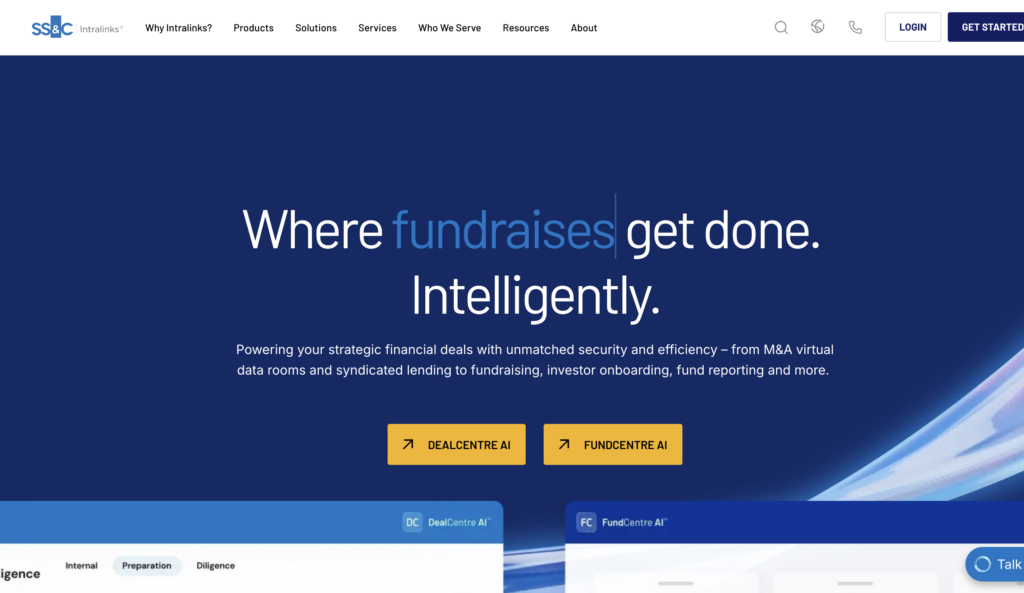
Overview: Like Datasite, Intralinks is a legacy enterprise platform built for large M&A, IPOs, and heavily regulated transactions. It’s a name many founders recognize, but it’s rarely the right starting point for an early-stage company.
Key features:
- Strong audit trails and granular permissioning
- Compliance-grade security certifications
- Deep experience with regulated, high-stakes deals
Pricing: Historically, a mix of per-page and per-user pricing, with small implementations starting around $10,000 annually.
Best for: Startups in a genuinely complex, heavily regulated deal (for example, a late-stage transaction involving multiple jurisdictions) — not a typical early fundraising round.
Caveat: Like Datasite, this is priced and built for enterprise M&A. Most startups will find the cost and configuration effort disproportionate to what a fundraising data room actually requires.
6. SecureDocs
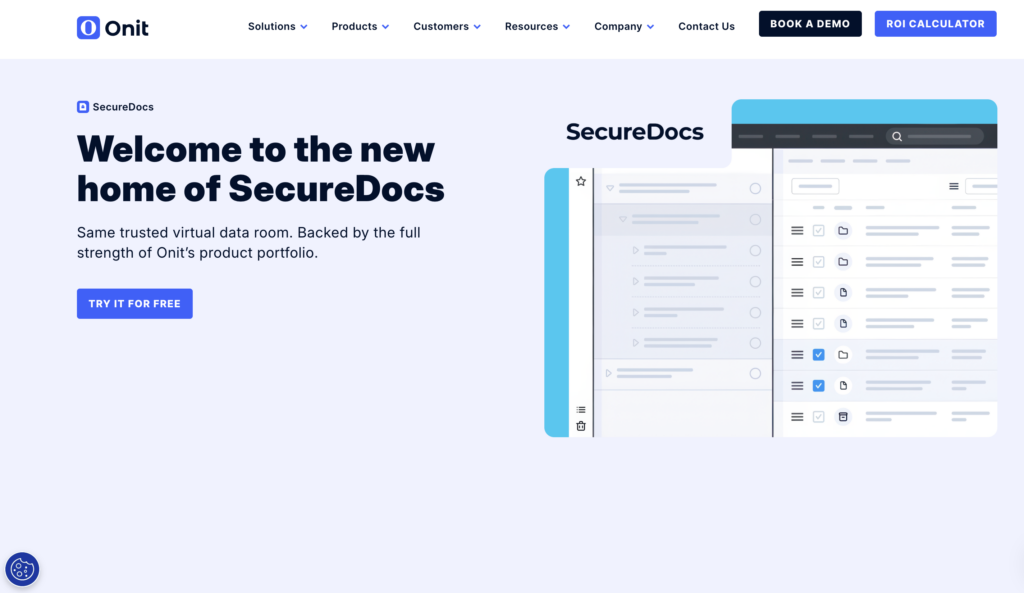
Overview: SecureDocs positions itself around speed and simplicity — the company markets a live data room in as little as 10 minutes, with flat, transparent pricing rather than per-page fees.
Key features:
- Unlimited users and unlimited documents on every plan
- Drag-and-drop and scan uploads, built-in e-signatures
- 256-bit encryption, two-factor authentication, and full audit trails
- 24/7 support included
Pricing: $250/month flat (billed annually) for longer-term projects, or $400/month billed quarterly for short-term, single-deal use; a 14-day free trial is available.
Best for: Startups that want a genuinely fast, no-frills setup with unlimited users and predictable flat pricing.
Caveat: The analytics are basic — views and downloads only — and the interface, while functional, isn’t as modern or AI-driven as newer entrants like Ansarada.
7. DealRoom
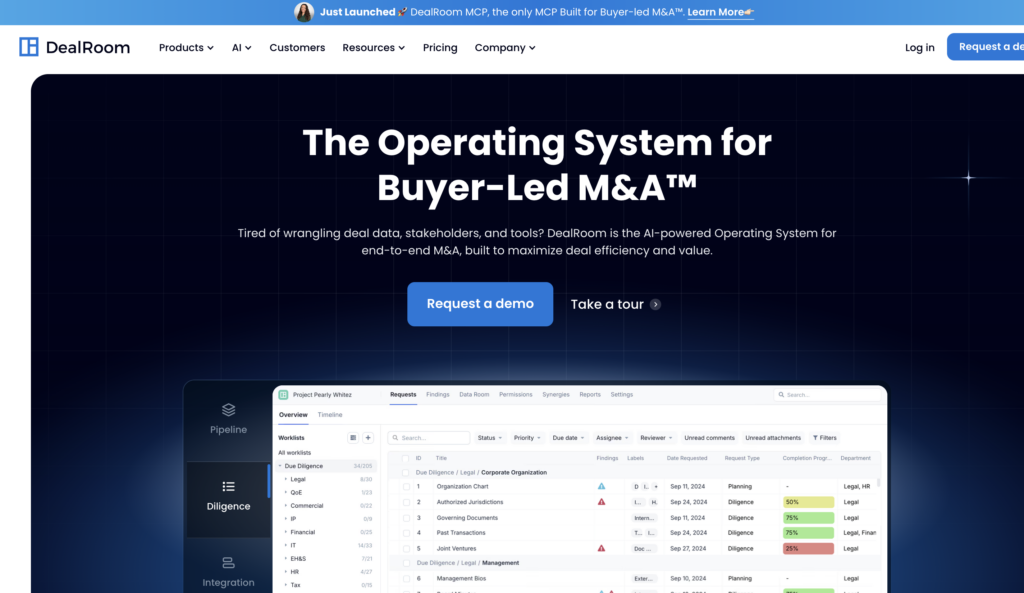
Overview: DealRoom positions itself less as a standalone data room and more as a full deal-lifecycle platform, combining document storage with pipeline tracking and structured due diligence request management.
Key features:
- Deal pipeline and stage tracking
- Structured due diligence request lists with task assignment
- AI-assisted contract analysis
Pricing: Tiered subscription, generally in the $1,000–$3,000/month range depending on plan.
Best for: Startups running a more structured, multi-investor fundraising process who want pipeline visibility alongside document sharing — not just a folder of files.
Caveat: It’s priced and built for ongoing deal management rather than a single quick raise, so it can be more than a pre-seed or seed startup needs.
8. DocSend
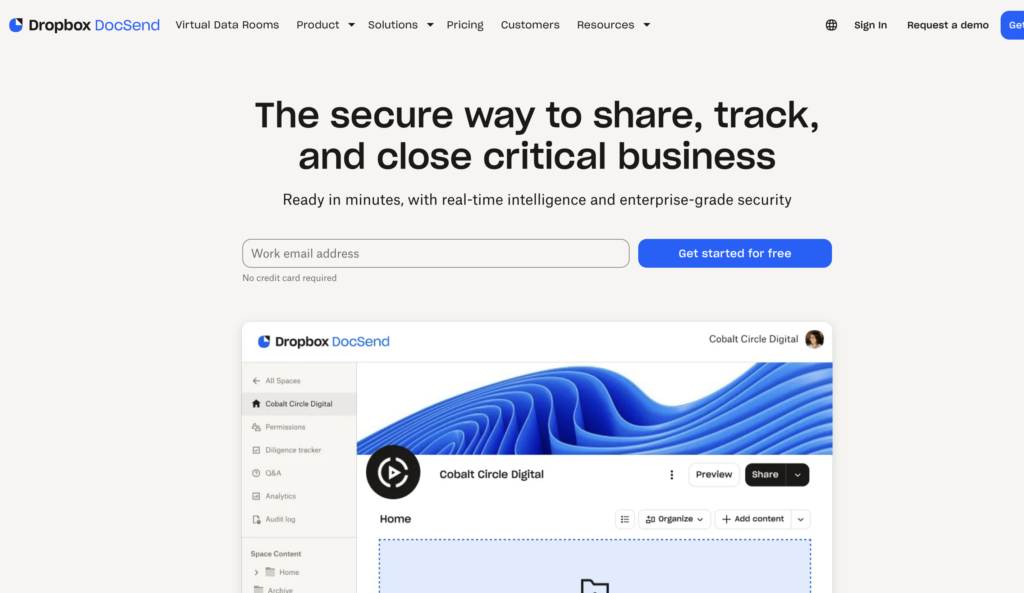
Overview: Owned by Dropbox, DocSend is a lightweight document-sharing platform many pre-seed and seed founders use for the earliest stage of investor outreach — before a full data room is even necessary.
Key features:
- Real-time tracking of who opens a pitch deck and how long they spend on each slide
- Simple links instead of a full room structure
- Easy integration with existing Dropbox workflows
Pricing: Entry plans start in the $15–$45/month range.
Best for: Pre-seed founders sharing pitch decks and early materials, not yet running full due diligence.
Caveat: It’s a document-sharing tool first, not a full data room — most startups will need to graduate to a dedicated VDR once due diligence begins in earnest.
Startup Due Diligence Data Room: What to Prepare Beyond the Software
Choosing a platform is only half the job. Before investors get access, most startups need a startup due diligence data room stocked with:
- Cap table and equity documentation
- Financial statements and projections
- IP assignments and any patent filings
- Employment agreements and contractor contracts
- Corporate governance documents (incorporation, board minutes, bylaws)
Getting these organized before an investor asks — not after — is one of the most common pieces of advice from startup lawyers and accelerator mentors. For a deeper walkthrough of what to include, see our guide on building a startup data room.
Best Data Room Hong Kong: Local Considerations for APAC Founders
For founders raising from Hong Kong or broader APAC-based investors, a few extra considerations matter: check that your chosen provider offers support during Asia-friendly hours, confirm where data is hosted if local investors have data residency preferences, and make sure the interface and support are genuinely usable for a fast-moving fundraising timeline rather than built around Western enterprise sales cycles. For founders wanting a broader view of Hong Kong’s financial regulatory environment as it relates to data handling and cross-border transactions, the Hong Kong Monetary Authority is the relevant official body to consult.
Investor Data Room Software vs. Free Tools
It’s tempting to just drop everything into a Google Drive folder and share the link. For pre-seed conversations, that’s often fine. But once you’re in real due diligence, investor data room software offers three things generic cloud storage doesn’t: granular per-document permissions, audit trails showing exactly who viewed what and when, and dynamic watermarking that discourages sensitive documents from circulating beyond the intended recipient. For due diligence on Reg D or Reg S offerings, the SEC’s investor bulletins outline the type of disclosure diligence investors typically expect — a useful reference for what your data room should ultimately support.
FAQs
Do startups really need a data room? Not always at the earliest pre-seed stage, but once multiple investors are conducting due diligence in parallel, a dedicated data room becomes far more efficient and professional than emailing files back and forth.
What’s the cheapest data room for a seed round? Flat-rate options like Firmex or SecureDocs (both around $250/month) or DocSend’s low-cost entry plan tend to be the most affordable starting points for a seed-stage raise — far below what enterprise platforms like Datasite or Intralinks charge.
Can I use Google Drive instead of a data room? You can for early, informal sharing, but Google Drive lacks the granular permissions, audit trails, and watermarking that a dedicated virtual data room provides — features investors increasingly expect once formal due diligence begins.
What’s the difference between a virtual data room and cloud storage? A virtual data room adds deal-specific controls — per-document permissions, engagement tracking, watermarking, and revocable access — that generic cloud storage tools weren’t built for.
How much should a startup budget for a data room? Most startups can expect to spend anywhere from around $15/month (DocSend) to roughly $250–300/month for a solid, startup-appropriate data room like Firmex or SecureDocs — well below the $10,000–$40,000+ annual cost of enterprise-grade platforms like Datasite or Intralinks.
Final Verdict
There’s no single best data room for every startup — the right pick depends on your stage, budget, and how many investors you’re coordinating at once. Pre-seed founders sharing a pitch deck are well served by DocSend. Seed and Series A startups running real due diligence should look at Firmex or SecureDocs for straightforward, flat-rate pricing, DealRoom if you want pipeline tracking alongside the data room, or Ideals if you want stronger security and investor-grade polish. Ansarada is worth considering once you’re managing a larger, more competitive raise. Datasite and Intralinks, meanwhile, are worth knowing about mainly so you can recognize when a “best data room” list is really describing enterprise M&A tools your startup doesn’t need yet.
Whichever you choose, compare a couple of these providers directly against your own checklist — pricing, ease of setup, and investor-facing polish — before committing.